
"coffee growing history"
6000 article(s) found

Coffee growing history of Lake Kivu, Congo, an African coffee growing region? Raw bean treatment of Congolese coffee
Professional coffee knowledge exchange more coffee bean information please follow the coffee workshop (Wechat official account cafe_style) African coffee growing history of Lake Kivu in Congo? How to handle raw beans of Congolese coffee? The Democratic Republic of the Congo, known as the Democratic Republic of the Congo (DRC), runs through the north of the equator and is mainly located in central Africa across the Congo River from another Congo.

Costa Rican Coffee Culture Costa Rica Coffee History
Costa Rica, with a population of only 3.5 million, has 400 million coffee trees, and coffee exports account for 25 per cent of the country's total exports. Costa Rica also benefits from the Central American Society for Agricultural Research (Turrialba of the Central American Agricultural Research Institute, IAAC) in Tarasu, which is an important international research center.

Ecuadorian coffee has a long history, single coffee, manor beans.
Coffee has a long history in Ecuador. Coffee was Ecuador's main export from the early 19th century to the early 20th century. But Ecuadorian coffee has never been included in the category of high-quality coffee due to its destructive deforestation and low processing of raw beans. Ecuador, like its neighboring coffee-growing countries, has ideal elevations and climate bars.

Hawaiian coffee bean producing area, Hawaiian coffee history
Following Cafe (Wechat official account vdailycom) found that the Beautiful Cafe opened a small shop of its own, Hawaii Coffee producing area Hawaii (Hawaii) spans 19 to 22 latitudes, south of the Tropic of Cancer, the trade wind blows the Hawaiian Islands, is a perfect coffee growing area, the 50th state of the United States, 2400 miles from the west coast of the United States, is the United States.

Hawaii Kona Coffee History Story Kona Coffee Food how about Chocolate and Coffee
Kona Coffee is a world-famous coffee that grows only on the slopes of two volcanoes on the big island. The porous and mineral-rich volcanic soil, coupled with often sunny mornings, but cloudy or rainy afternoons, breezes and mild nights give coffee from the big island a unique flavor. Taste the local coffee and chocolate experience, more and more Hawaiian coffee will lead

Introduction to the characteristics, Origin and planting History of Arabica Coffee
If you want to know coffee and its cultural story, you have to know Ethiopia, the hometown of Arabica coffee beans of individual coffee. Besides bringing you carefully selected Ethiopian-Yegashifi G1 coffee beans and earbags, Diguo Coffee is also here to organize some introduction materials to show you about this remote and historic hometown of coffee. This article will

History of taste characteristics of Guatemalan coffee
The main areas rich in high-quality coffee in Guatemala are Lake Attilan (Lake Atitlan) and Huehuentenango. The purpose of the project is to help restore the vicious circle of high yield and low quality that has plagued the world coffee industry. For example, Bourbon trees grow taller and produce less coffee beans than the new dwarf trees, although they all belong to Arabica coffee varieties.

Boutique Coffee Raw beans the latest Coffee Bean introduction Coffee Raw Bean History details
Raw coffee beans are the seeds of coffee trees. It is the wealth hidden in coffee cherries (coffee berries) that people usually call coffee cherries. They are mistakenly called beans because they are similar to the beans we usually see, but they are actually the seeds of coffee. Usually there are two flat oval coffee beans in the coffee berries, and there is only one in a few coffee berries.

General knowledge of Fine Coffee Culture History and Culture of Cuban Coffee
In 1748, coffee was introduced into Cuba from Dominica, and Cuba began to grow coffee ever since. With fertile land, humid climate and abundant Rain Water, Cuba can be called a natural treasure land for coffee cultivation. The suitable natural conditions provide a favorable natural environment for the growth of coffee trees, and coffee is well planted and developed here. In Cuba, the cultivation of coffee is regulated by the state. Cuba is the most

General knowledge of Coffee Culture the History and Culture of Cuban Coffee
In 1748, coffee was introduced into Cuba from Dominica, and Cuba began to grow coffee ever since. With fertile land, humid climate and abundant Rain Water, Cuba can be called a natural treasure land for coffee cultivation. The suitable natural conditions provide a favorable natural environment for the growth of coffee trees, and coffee is well planted and developed here. In Cuba, the cultivation of coffee is regulated by the state. Cuba is the most

The spread of Coffee the World Development History of Fine Coffee
People think that Africa is the hometown of coffee. But coffee actually originated in Ethiopia and spread around the world through the Yemeni port of Mocha. The history of Ethiopian coffee cultivation began in 575 AD. For those Arabs, coffee, like Chinese silk at that time, was a national treasure. If anyone is lucky enough to taste this fragrance and refreshing,

A brief history of Panama coffee plantations
While commodity prices for coffee were relatively low, the panama boutique coffee association organized a contest called best panama: beans from different parts of panama were ranked and auctioned online. The Esmeralda estate has been growing Geisha coffee for years, and this auction has made their coffee known to more people. after

Hawaiian Coffee introduces the characteristics and development history of Kona coffee.
Hawaii, which spans latitudes 19 to 22 degrees, south of the Tropic of Cancer and blown by trade winds, is a perfect coffee-growing area. The 50th state of the United States, 2400 miles from the west coast of the United States, is the only state in the United States that produces coffee. Kona kona in Hawaii is also internationally renowned as one of the best coffee in the world. In the volcanic soil

Hawaiian Coffee introduces the characteristics and development history of Kona coffee.
Hawaii, which spans latitudes 19 to 22 degrees, south of the Tropic of Cancer and blown by trade winds, is a perfect coffee-growing area. The 50th state of the United States, 2400 miles from the west coast of the United States, is the only state in the United States that produces coffee. Kona kona in Hawaii is also internationally renowned as one of the best coffee in the world. In the volcanic soil

Panama Casa #8231; Lois Single Bean Flavor Description Variety Growing History Place of Origin
Professional barista communication Please pay attention to coffee workshop (Weixin Official Accounts cafe_style ) Panama Panama Population: 3406000 Coffee in Panama is defined according to how coffee is produced, not according to geography. In the past, when coffee was widely cultivated, when the areas listed below were small and densely clustered, the beans produced could be combined into a unit.

Brief introduction to the characteristics and Development History of Hawaiian Coffee
Hawaii, which spans latitudes 19 to 22 degrees, south of the Tropic of Cancer and blown by trade winds, is a perfect coffee-growing area. The 50th state of the United States, 2400 miles from the west coast of the United States, is the only state in the United States that produces coffee. Kona kona in Hawaii is also internationally renowned as one of the best coffee in the world. In the volcanic soil

A famous coffee growing area in the history of mocha coffee development.
Mocha gets its name from the famous port of Mocha. Transportation in East Africa was very underdeveloped in the 15th century, but it produced the world's most precious coffee beans, which were gathered in the Yemeni port of Mocha and shipped to Europe. Today, photos of mocha coffee production methods in the port of Mocha (11 photos) have retreated inland due to the accumulation of silt.
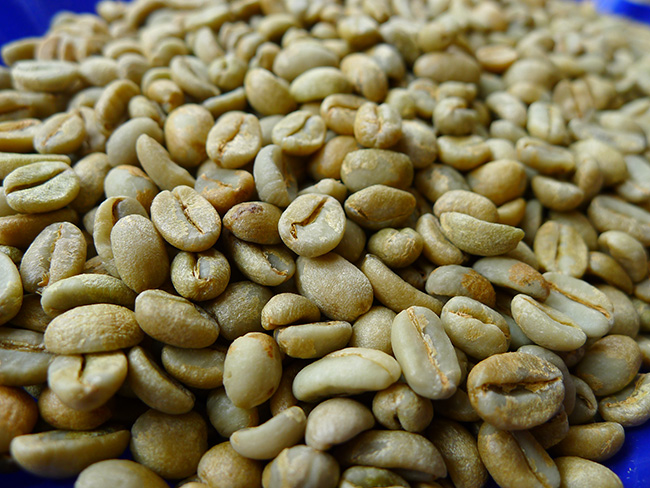
The cultivation of coffee beans the history of coffee beans the cultivation of raw coffee beans
Coffee raw beans are the seeds of coffee trees. It is the wealth hidden in coffee cherries (coffee berries) that people usually call coffee cherries. They are mistakenly called beans because they are similar to the beans we usually see, but they are actually the seeds of coffee. There are usually two flat oval coffee beans in the coffee berries, and a small number of coffee berries

Costa Rican Coffee History _ introduction to the Flavor of Costa Rican Organic Coffee cultivation
For more information about coffee beans, please follow the Coffee Workshop (Wechat official account cafe_style) Educardo Matos History Costa Rica is a country next to Panama, located in the central United States, as a bridge between the North and the South, its location makes it a trading hub for aborigines. When outsiders arrive from the old world,

Top Coffee recommendation-Cuban Crystal Mountain Coffee History of Cuban Crystal Mountain Coffee
In 1748, coffee was introduced into Cuba from Dominica, and Cuba began to grow coffee ever since. With fertile land, humid climate and abundant Rain Water, Cuba can be called a natural treasure land for coffee cultivation. The suitable natural conditions provide a favorable natural environment for the growth of coffee trees, and coffee is well planted and developed here. In Cuba, the cultivation of coffee is regulated by the state. Cuba is the most